 Book Online
Share your details and our team will contact you shortly.
The main difference is access. Closed rhinoplasty is performed through incisions inside the nostrils, so there is no external scar. Open rhinoplasty adds a small incision across the columella, giving the surgeon a direct view of the cartilage. Research has not shown one approach to be better overall; the right choice depends on your nose and your surgeon's assessment.
If you are researching rhinoplasty, you will quickly find strong opinions on both sides. This guide sets out what each approach involves, where each tends to be used, what published reviews actually found, and the questions worth asking at your consultation. It does not replace that consultation: the technique is a surgical decision made by your surgeon after examining you.
Rhinoplasty can reduce a hump, narrow the bridge, refine or support the tip, change the nostrils, or correct asymmetry. It is often combined with septal surgery when breathing is also a concern. According to the NHS, it is usually considered once the nose has finished growing, in people who are in good general health and have realistic expectations.
Both open and closed rhinoplasty can be suitable for these goals. Which one fits you depends on factors such as:
Your surgeon will weigh these during a full consultation.
In a closed (endonasal) rhinoplasty, all incisions are placed inside the nose. The skin is lifted from the underlying bone and cartilage through these internal incisions, and the reshaping is done without an external cut. BAPRAS notes that this leaves no external scar and that swelling is generally lower, but that changes to the tip are made less directly because the surgeon has a more limited view.
Closed rhinoplasty is often discussed for more limited changes, for example reducing a dorsal hump or making modest tip adjustments, though experienced surgeons use it across a wide range of cases.
In an open (external) rhinoplasty, the surgeon adds a small incision across the columella, the strip of skin between the nostrils, and connects it to incisions inside the nose. The skin can then be folded back so that the cartilage framework is fully visible. BAPRAS describes this as giving a better view and potentially more accurate tip work, with the trade-off of greater swelling and a longer recovery.
Open rhinoplasty is commonly chosen for complex tip work, significant asymmetry, extensive grafting, and many revision cases. The columellar scar usually heals as a fine line, but it is a scar, and how it heals varies between people.
Whichever approach is used, the operation is usually performed under general anaesthesia, the bone and cartilage can be reshaped, and the septum can be treated if needed. A splint is usually worn for about a week afterwards.
| Factor | Closed rhinoplasty | Open rhinoplasty |
|---|---|---|
| Incisions | Inside the nostrils only | Inside the nostrils plus a small incision across the columella |
| External scar | None | A small scar on the columella that usually fades |
| Surgeon's view | More limited, indirect | Direct view of the cartilage framework |
| Typical use | Often more limited changes | Often complex tip work, grafting, revisions |
| Swelling | BAPRAS: generally lower | BAPRAS: generally greater, recovery can take longer |
| Research findings | A 2025 meta-analysis found no significant difference in swelling, bruising, satisfaction or complication rates between approaches |
Two systematic reviews are useful here:
In plain terms: the evidence does not crown a winner. Patient-level factors, the type of change needed, and the surgeon's experience with each approach appear to matter more than the label "open" or "closed". This is also why individual patient leaflets, such as BAPRAS's, may describe more swelling after open surgery, while pooled studies do not show a statistically clear difference.
In the first week the experience is similar: a splint, a blocked nose, some bruising and swelling. The NHS describes the splint staying for about seven days, bruising and swelling fading by around three weeks, and swelling taking up to six months to go completely. ASPS notes that the final contour may take up to a year to fully refine.
After open rhinoplasty, tip swelling may be more noticeable and may last longer, because the skin over the tip has been lifted more extensively. For a stage-by-stage guide, see our rhinoplasty recovery week by week article and the glossary entry on the recovery timeline.
| Period | Common to both approaches |
|---|---|
| Week 1 | Splint on, nasal breathing limited, light bleeding possible |
| Weeks 2–3 | Splint off, visible bruising fades, return to desk work is common |
| Weeks 4–6 | Gradual return to strenuous exercise if your surgeon agrees |
| Months 3–12 | Residual (especially tip) swelling settles; may be slower after open approach |
The general risks of rhinoplasty apply to both approaches. The NHS lists bleeding, infection, blood clots and reaction to anaesthesia, as well as breathing difficulty, altered sense of smell, septal damage and nosebleeds. A collection of blood (haematoma) can occur after any surgery.
Approach-specific considerations include:
With either technique, some people are not satisfied with the result, and a revision surgery is sometimes discussed. Surgeons usually wait until swelling has settled before considering this. Your surgeon will explain your individual risks.
AYT Clinic is a licensed health tourism facilitator. We coordinate your journey; the surgical approach is decided by the surgeon named in your plan after examining you. When planning rhinoplasty in Antalya, it helps to know:
If you have questions that your plan does not answer, ask us before you travel.
Not in general. Systematic reviews from 2022 and 2025 found no overall advantage of one approach over the other. The better approach is the one that suits your anatomy and goals, as judged by your surgeon.
It leaves a small scar across the columella. It usually fades to a fine line, but healing varies between individuals, and your surgeon can explain what to expect for your skin.
Patient information from BAPRAS describes more swelling and a longer recovery after open surgery. A 2025 meta-analysis did not find a statistically significant difference in swelling or bruising. In practice, tip swelling may linger longer after an open approach.
You can and should discuss your preferences, but the final decision is a surgical one based on your nose and what needs to be changed. Your surgeon decides.
Not always. Scar tissue and earlier changes can make the anatomy harder to assess, which is one reason surgeons may prefer the direct view of an open approach, but the choice depends on the case and is made by your surgeon.
To learn more about the procedure and how a personal plan is prepared, visit our rhinoplasty treatment page. Send us your photos and questions, and we will explain the next steps.
This article is for general information and does not replace a consultation with a qualified surgeon.
Related reading: Rhinoplasty Recovery Week by Week: Swelling, Splint and Final Results · Rhinoplasty in Turkey vs UK: What to Check Before You Book · Rhinoplasty cost in Turkey: what's included
Medically reviewed by Dr. Mehmet Ali Korkmaz, Plastic Surgeon.
Last updated: 14.11.2026
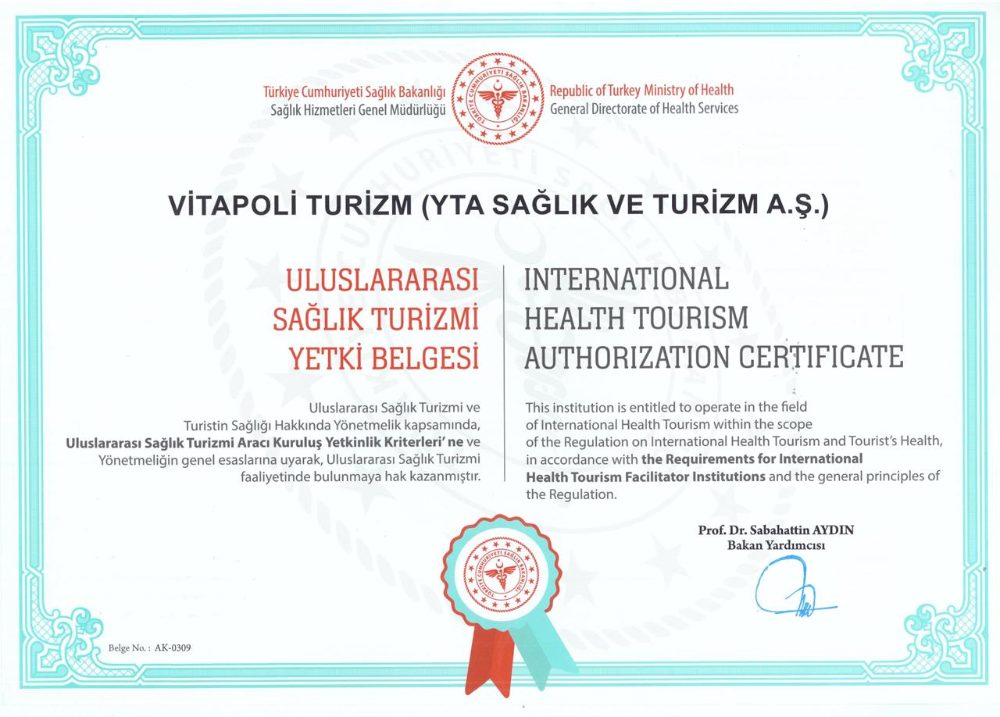
AYT Clinic (YTA Sağlık ve Turizm A.Ş.) is a licensed health tourism intermediary (licence no. AK-0309) that coordinates treatments in Antalya.
Make an Appointment
Talatpaşa Boulevard No: 113-9, Hacettepe Mahallesi, Altındağ / Ankara, Türkiye
Çalkaya Falezleri Cad. No: 2 Daire: 8, Altıntaş / Aksu / Antalya, Türkiye
Send Email: [email protected]
Call Us: +90 850 888 6898