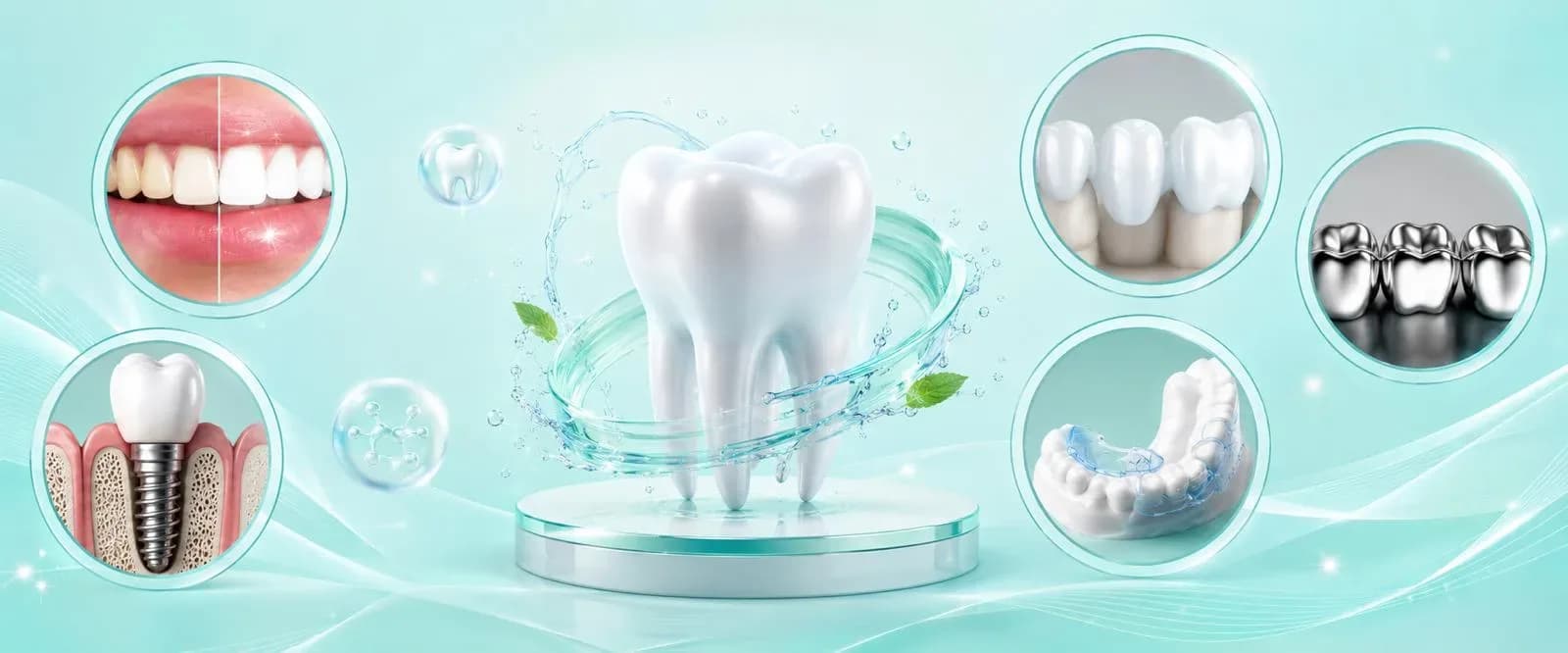
A veneer is a thin, custom-made shell bonded to the front of a tooth to change its colour, shape or size – a bit like a false fingernail over a nail. Veneers are used for teeth that are discoloured and do not respond to whitening, chipped or worn teeth, small gaps, and teeth that are slightly uneven in shape or length. They are made either of ceramic (porcelain) in a dental laboratory, or of tooth-coloured composite resin.
How much of the tooth is removed – and why it matters. For a porcelain veneer the dentist usually removes a thin layer of enamel from the front (and partly the sides) of the tooth, so the veneer does not look bulky. In studies this is typically around 0.5 mm on the front surface – less near the gum and up to about 0.7–1.0 mm at the biting edge if that edge is covered – usually under 1 mm in total. That sounds small, but enamel near the gum is only about 0.3–0.4 mm thick on front teeth. Overall, a veneer preparation removes roughly 3–30 % of the visible tooth, compared with about 63–72 % for a full crown. This removal is permanent and cannot be undone: a prepared tooth will always need a veneer or another restoration, and veneers will need replacing during your lifetime. That is why a careful dentist removes as little as possible, keeps the preparation in enamel where it can (veneers bond best to enamel) and treats only the teeth that really need it.
E.max lamina – lithium disilicate glass-ceramic. Many patients search for "e.max veneers". e.max is a brand name for lithium disilicate, a strong glass-ceramic that can be made in thin layers. In a systematic review of ceramic veneers, glass-ceramic veneers had an estimated survival of 94 % over a median of about nine years, and feldspathic porcelain 87 %. Very thin "lamina" veneers work best when the tooth underneath already has a good colour; a darker tooth needs a thicker veneer – and therefore more preparation – to mask it.
Veneers, composite veneers and bonding. Composite veneers and composite bonding use tooth-coloured resin shaped directly on the tooth, usually in one visit, with less (sometimes no) enamel removal; they are easier to repair but stain and wear more easily than ceramic. In a 10-year clinical trial, ceramic veneers outlasted laboratory-made composite veneers (100 % vs 75 % survival). If you are thinking about a full smile makeover with many teeth, see our Hollywood Smile page.
In Antalya, AYT Clinic coordinates your online assessment, treatment by an independent licensed dentist, your hotel, transfers and follow-up.
Sources: Oral Health Foundation – Veneers; ADA MouthHealthy – Veneers; Edelhoff & Sorensen, J Prosthet Dent 2002; Vanlioğlu & Kulak-Özkan, Clin Cosmet Investig Dent 2014; Morimoto et al., Int J Prosthodont 2016.





 4.9