 Book Online
Share your details and our team will contact you shortly.
Porcelain veneers often last well over a decade. In a long-term study, about 94 in 100 were still in place after 10 years and about 83 in 100 after 20 years. Composite veneers usually need repair or replacement sooner. Grinding, root-filled teeth, biting habits and poor cleaning are the main reasons veneers fail early. See our porcelain veneers in Antalya page for how treatment is planned.
| Veneer type | What it is | What studies report |
|---|---|---|
| Porcelain (ceramic) | Thin ceramic shell made in a laboratory and bonded to the tooth | 93.5% survival at 10 years, 82.9% at 20 years in a study of 318 veneers [1]; 89% overall survival at a median of 9 years in a meta-analysis of 13 studies [2] |
| Glass-ceramic (e.g. lithium disilicate, often sold as E.max) | A stronger type of ceramic | 94% estimated survival in the same meta-analysis [2] |
| Lab-made (indirect) composite | Resin veneer made in a laboratory | 75% survival at 10 years in a small randomised split-mouth trial, where no ceramic veneer failed [3] |
| Direct composite ("composite bonding" veneers) | Resin built up on the tooth in the chair | Generally shorter-lived and more prone to staining and wear, but easier to repair [4] |
These figures come from studies with selected patients and regular check-ups. Your own result depends on your bite, habits and care.
A 20-year clinical study. Researchers in Innsbruck followed 318 porcelain veneers in 84 patients for up to 20 years. Estimated survival was 94.4% at 5 years, 93.5% at 10 years and 82.9% at 20 years. The most common reason for failure was fracture of the ceramic. Patients who ground their teeth had a 7.7-times higher risk of failure, teeth that had lost their nerve (root-filled teeth) failed more often, and smokers had more discolouration at the edges [1].
A meta-analysis. A review of 13 clinical studies estimated overall survival of 89% at a median follow-up of 9 years: 94% for glass-ceramic veneers and 87% for feldspathic porcelain. The most frequent complication was fracture or chipping (4%), followed by debonding (2%), severe discolouration at the margin (2%), nerve problems (2%) and new decay (1%) [2].
Composite vs ceramic. In a randomised split-mouth trial, each patient received both types. After 10 years, survival was 75% for laboratory-made composite veneers, while none of the ceramic veneers had failed, and the surviving composite veneers also had more wear, roughness and colour change [3]. The trial was small, but the direction matches other evidence.
| Porcelain veneers | Composite veneers | |
|---|---|---|
| Lifespan in studies | Longer [1, 2, 3] | Shorter [3] |
| Tooth preparation | Usually a thin layer of enamel [5] | Often little or none for direct composite |
| Repair | Chips usually mean replacement | Small chips can often be repaired in the chair [4] |
| Staining and wear | More resistant [3, 4] | More prone to staining and wear [3, 4] |
| Appointments | Laboratory work, usually two or more visits | Direct composite can often be done in one visit |
| Upfront cost | Higher | Lower, but more maintenance over time |
Most veneers need a thin layer of enamel removed from the front of the tooth [5]. A laboratory study found that veneer preparations removed roughly 3–30% of the tooth crown, compared with about 63–72% for full crowns [6]. This loss is irreversible, so a tooth that has been prepared for a veneer will always need a veneer or another restoration [4]. The NHS notes that some veneers need little or no tooth removed [7]; your dentist can say whether this is possible for you.
The longest-lasting veneers start with careful planning: healthy gums, a suitable bite, a decision on how many teeth really need veneers, and enough enamel left to bond to. AYT Clinic is a licensed health tourism facilitator. Treatment is carried out by the dentist and clinic named in your plan; AYT coordinates the process. Your plan starts with photos and an in-person consultation in Antalya before any tooth is prepared. If a tooth is too weak for a veneer, a zirconia crown may be suggested instead.
Porcelain veneers through AYT start from £185 per tooth. Your final quote depends on your examination and is shown in your personal plan.
In a 20-year study, about 94% were still in place at 10 years and 83% at 20 years [1]. Results depend on bite, habits and care.
Usually less long than porcelain. In a 10-year trial, 75% of lab-made composite veneers survived, while none of the ceramic ones failed [3]. Composite is easier to repair [4].
E.max is a lithium disilicate glass-ceramic. A meta-analysis estimated 94% survival for glass-ceramic veneers at a median of 9 years [2].
Not automatically. Many last longer; some need repair sooner. Replacement depends on condition, not a fixed date [1, 2].
No. Whitening does not change the colour of porcelain or composite. If you plan to whiten your natural teeth, it is usually done before the veneer shade is chosen.
Keep it, avoid chewing on that tooth and contact your dentist. An intact porcelain veneer can sometimes be bonded back [2].
Read more on our porcelain veneers page and send us photos of your smile. The dental team will tell you whether veneers suit your teeth and bite, and how many teeth they would suggest treating.
Tüm URL'ler 13.11.2026'da kontrol edildi (HTTP 200, PubMed E-utilities kaydı veya web araması ile).
Dentist
Last updated: 14.11.2026
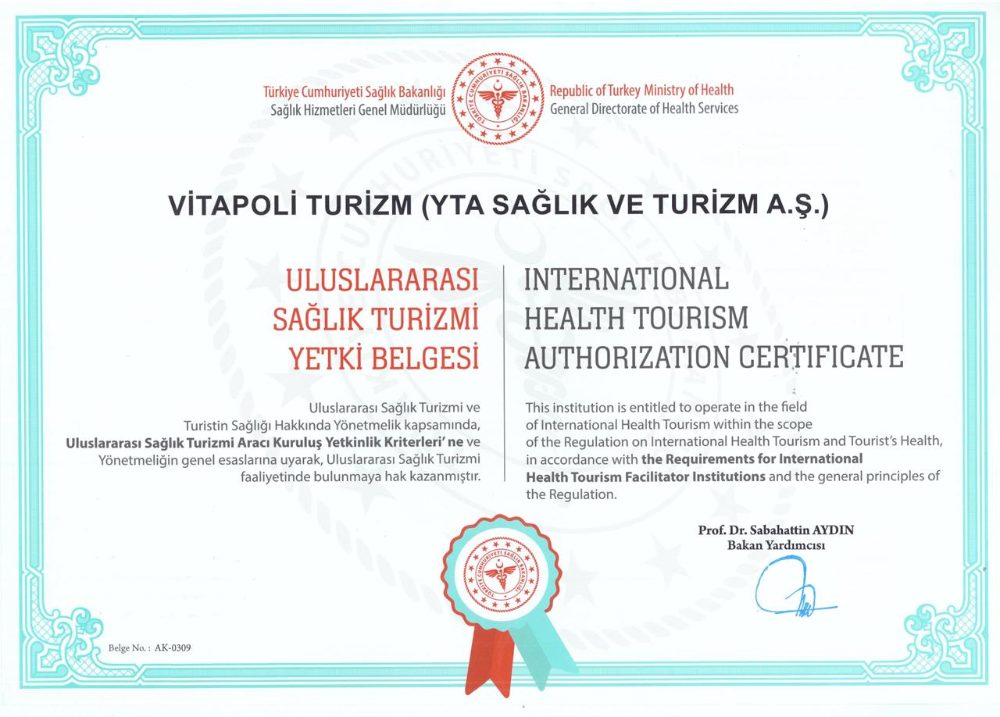
AYT Clinic (YTA Sağlık ve Turizm A.Ş.) is a licensed health tourism intermediary (licence no. AK-0309) that coordinates treatments in Antalya.
Make an Appointment
Talatpaşa Boulevard No: 113-9, Hacettepe Mahallesi, Altındağ / Ankara, Türkiye
Çalkaya Falezleri Cad. No: 2 Daire: 8, Altıntaş / Aksu / Antalya, Türkiye
Send Email: [email protected]
Call Us: +90 850 888 6898