Get a Price Quote
Share your details and our team will contact you shortly.
Tummy Tuck in Turkey: Is It Safe? Reviews & Checklist
A tummy tuck in Turkey costs a fraction of the UK price, and that is exactly why so many people type "is it safe to have a tummy tuck in Turkey" or scroll through tummy tuck in Turkey reviews before they book. The honest answer is that safety does not depend on the country. It depends on the hospital, the surgeon, the facilitator organising your trip and the aftercare you receive once you are home. This guide explains what UK and Turkish authorities say, how to read reviews properly, and gives you a checklist you can work through before paying a deposit.
Is it safe to have a tummy tuck in Turkey? The short answer
A tummy tuck (abdominoplasty) is a major operation wherever you have it. It is performed under general anaesthesia, takes two to four hours and involves a hospital stay. The risks - infection, bleeding, seroma, wound-healing problems, blood clots and the need for a revision - are the same in Antalya as in Manchester. What changes between providers is how well those risks are managed: the standard of the hospital, the surgeon's training, the pre-operative checks, the way complications are handled and how the trip is planned around your recovery.
So the useful question is not "is Turkey safe" but "is this clinic, this surgeon and this package safe for me". A well-regulated hospital in Turkey with a board-certified plastic surgeon and a clear complication policy can be a sound choice. A cheap package booked through an anonymous social-media account with no named surgeon and a flight home on day three is not, in any country.
What official guidance says about a tummy tuck in Turkey
Three UK sources are worth reading before you decide, because they are independent of any clinic.
FCDO travel advice for Turkey
The Foreign, Commonwealth & Development Office has a medical tourism section in its Turkey travel advice (last updated 18 November 2026). It notes that standards of facilities and treatment vary widely between and within countries, and says it is aware of 7 British nationals who died in Turkey in 2025 after medical procedures, with others needing further treatment for complications. Its practical recommendations are to discuss your plans with your UK doctor first, to do your own research rather than relying on a company's own literature, and to use the Turkish Ministry of Health's HealthTürkiye website to check that a provider is approved. It also reminds travellers that the UK GHIC/EHIC card is not valid in Turkey, so you need proper travel insurance.
NHS advice on cosmetic surgery abroad
The NHS cosmetic surgery abroad page advises you to research the surgeon's qualifications and the clinic's registration, to have a face-to-face or video consultation before you travel, to understand what happens if something goes wrong, and to plan enough time in the country for your recovery. It also makes the point that the NHS may not fund revision surgery for a procedure you chose to have privately abroad, although it will treat emergencies.
BAAPS cosmetic tourism guidelines
The British Association of Aesthetic Plastic Surgeons publishes cosmetic tourism guidelines. The themes are consistent: know who is operating on you and check their credentials, make sure you have had a proper consultation with the surgeon (not only a sales agent), ask what aftercare is included, and do not combine surgery with a holiday or fly too soon afterwards.
None of these organisations say "do not go to Turkey". They say: check, verify and plan. That is what the rest of this article helps you do.
How Turkey regulates clinics that treat international patients
Turkey has specific rules for health tourism, and knowing them gives you concrete things to verify.
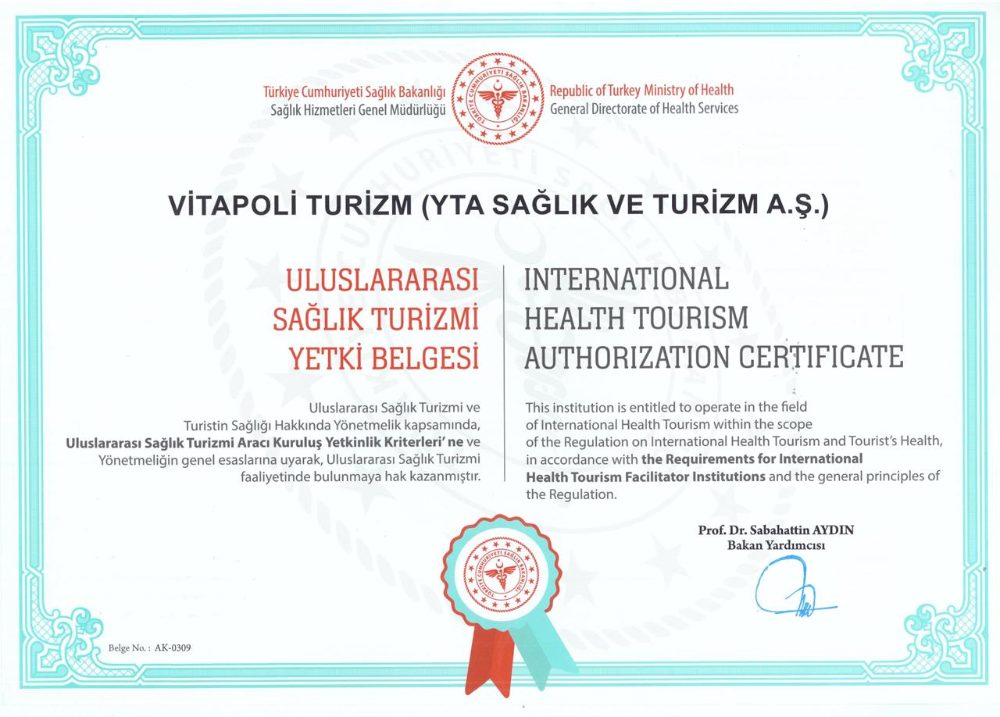
- Authorisation certificate. Hospitals and intermediary companies that treat or arrange treatment for international patients need an International Health Tourism Authorisation Certificate from the Ministry of Health. Facilitators without one are operating outside the rules. Our guide on how to check a licensed health tourism facilitator explains the steps.
- HealthTürkiye portal. The Ministry of Health lists approved providers on the HealthTürkiye platform, and the 2025 regulation requires authorised facilities and intermediaries to work through it. The FCDO points UK travellers to this list.
- Complication insurance. The International Health Tourism and Tourist Health Regulation published in the Official Gazette on 26 April 2025 made complication insurance mandatory for surgical procedures performed in an operating-theatre setting under health tourism. Ask any provider to show you the policy that covers your tummy tuck and to explain what it pays for.
- Hospital licensing and accreditation. A tummy tuck should be done in a fully licensed hospital with an intensive-care unit, not in a day clinic. Many Antalya hospitals also hold international accreditation (for example JCI); check the hospital's name and look it up yourself.
- Surgeon qualifications. In Turkey, "plastic, reconstructive and aesthetic surgery" is a protected specialist title that requires a five-year residency after medical school. Ask for the surgeon's full name and specialty and confirm membership of the Turkish Society of Plastic, Reconstructive and Aesthetic Surgeons (TPRECD) or a European board (EBOPRAS).
Tummy tuck in Turkey reviews: how to read them properly
Reviews are useful, but only if you read them critically.
Where to look
Google Business reviews, Trustpilot and independent forums are more reliable than testimonials on a clinic's own website or Instagram. Look for reviews that mention the surgeon by name, describe the hospital and talk about what happened after the patient got home, not just how friendly the driver was.
Red flags in reviews and marketing
- Many five-star reviews posted within the same few days, all with similar wording.
- Reviews that never mention a surgeon's name, only the "team" or the "clinic".
- Before-and-after photos with no information about timing, or that look edited.
- Marketing that promises a certain outcome, denies that the operation has any risks or claims it involves no discomfort. No serious surgeon talks like that, and Turkish health advertising rules prohibit such claims.
- A quote that is dramatically below the market. If a tummy tuck with hotel and transfers is offered for far less than the typical Antalya range, ask what has been left out.
Questions that reveal more than a review
Ask the facilitator: Who exactly will operate on me, and can I speak to them before I travel? Which hospital, and does it have an ICU? What happens if I develop a seroma or wound problem after I get home? Is complication insurance included and for how long? How many nights are in hospital and how many in the hotel? The quality and speed of the answers tell you a lot about the organisation.
The 12-point checklist before you book a tummy tuck in Turkey
- Named surgeon with a verifiable plastic surgery specialty and society membership.
- A real consultation (video is fine) with the surgeon, not only with a sales coordinator.
- Licensed hospital with an intensive-care unit; you know its name and address.
- Facilitator holds a Ministry of Health authorisation certificate and appears on HealthTürkiye.
- Written complication insurance and a written revision policy.
- Pre-operative blood tests, anaesthesia assessment and a BMI check; a reputable surgeon will decline or postpone if you are not a suitable candidate.
- Honest advice on combining procedures. A tummy tuck is usually planned together with 360 liposuction, but very long combination surgeries increase risk.
- At least 1-2 nights in hospital after surgery, then 5-7 nights in Antalya before you fly, so stitches and drains can be checked by the surgical team.
- Compression garment, medication and clear written aftercare instructions included.
- A 24/7 contact and an English-speaking coordinator during your stay and after you return.
- Travel insurance that covers medical evacuation; check the small print on elective surgery.
- A fixed, itemised price so you know what is included and what is not.
If a provider ticks all twelve, you have done the due diligence the FCDO, NHS and BAAPS ask for. If several points are missing or the answers are vague, keep looking.
Price vs safety: why a cheaper tummy tuck in Turkey is not automatically riskier
At AYT Clinic a tummy tuck combined with 360 liposuction starts from £3,500 (≈ €4,100), hotel and transfers included. In the UK, The Private Clinic lists a standard tummy tuck from £9,200 (price page updated October 2026), and the NHS cosmetic procedures page gives a typical private range of £5,000-£10,000 without accommodation.
The gap is not created by cutting corners in the operating theatre. It comes from lower staff and property costs in Turkey, a weaker lira against the pound, high surgical volumes in Antalya's hospitals and the fact that packages are sold directly rather than through several layers of private healthcare pricing. A lower price is a reason to check standards more carefully, not a reason to assume they are missing. Our detailed article on what a tummy tuck in Turkey all-inclusive package includes shows line by line where the money goes.
Flying, recovery and aftercare: the parts that matter most for safety
Most serious problems after cosmetic surgery abroad are linked to travelling too early or to poor follow-up, not to the operation itself. For a tummy tuck, plan to spend 7-10 days in Antalya: 1-2 nights in hospital, then a hotel stay with scheduled check-ups so the surgeon can remove drains, inspect the wound and confirm you are fit to fly. Walk regularly, drink water and wear your compression garment to lower the risk of blood clots. On the flight home, move every hour and consider compression stockings as your surgeon advises. Read our guide on how long to stay in Turkey after a tummy tuck for a day-by-day plan.
Once you are home, keep the coordinator's contact details, send photos of the incision if asked, and know which UK service to contact in an emergency. Your GP should be told about the surgery; the NHS will treat genuine emergencies even if it will not fund cosmetic revisions.
How AYT Clinic approaches safety for tummy tuck patients
AYT Clinic is a Ministry of Health-authorised health tourism facilitator in Antalya. Tummy tuck operations are carried out by specialist plastic surgeons in fully licensed partner hospitals with intensive-care facilities. Every surgical package includes complication insurance and a written revision policy, pre-operative tests, 1-2 nights in hospital, hotel accommodation, airport and hospital transfers, a compression garment and a multilingual coordinator who stays in touch after you fly home. Before you travel you receive a video consultation with the surgeon, and if the surgeon considers you unsuitable - for example because of BMI, smoking or an uncontrolled medical condition - the operation is postponed or declined.
We do not promise results and we do not claim that any operation is without risk. What we can offer is transparency: the surgeon's name and credentials, the hospital's name, an itemised price and a clear answer about what happens if a complication occurs.
FAQ: safety of a tummy tuck in Turkey
Is it safe to have a tummy tuck in Turkey for UK patients?
It can be, provided you choose a licensed hospital, a specialist plastic surgeon, an authorised facilitator and allow enough recovery time before flying. The risks of the operation itself are the same as in the UK; the difference lies in how well each provider manages them.
How can I check whether a Turkish clinic is approved?
Ask for the Ministry of Health International Health Tourism Authorisation Certificate and look the provider up on the HealthTürkiye portal, which the FCDO recommends. Also confirm the surgeon's specialty and the hospital's licence independently.
Are tummy tuck in Turkey reviews reliable?
Independent reviews on Google or Trustpilot that name the surgeon and describe the aftercare are useful. Be cautious about clusters of identical five-star reviews, anonymous testimonials and any marketing that promises a certain outcome.
What happens if I have a complication after I get home?
Contact your coordinator and your GP immediately. With a reputable provider, complication insurance covers treatment of surgical complications for a defined period, and the revision policy explains how a corrective procedure is assessed. The NHS treats emergencies but may not fund cosmetic revisions.
How long should I stay in Turkey after a tummy tuck?
Plan for 7-10 days in total: 1-2 nights in hospital and 5-7 nights in a hotel with follow-up appointments before you are cleared to fly.
Why is a tummy tuck cheaper in Turkey if the standards are similar?
Lower operating costs, exchange rates and high surgical volumes explain most of the difference. At AYT Clinic a tummy tuck with 360 liposuction starts from £3,500 (≈ €4,100) including hotel and transfers, compared with UK private prices that typically start around £9,000.