 Book Online
Share your details and our team will contact you shortly.
An FDL tummy tuck, also called a fleur-de-lis abdominoplasty, is a tummy tuck with an extra vertical incision down the middle of the abdomen. A standard tummy tuck only removes skin from top to bottom; the fleur-de-lis tummy tuck also removes skin from side to side. That makes it the procedure most often recommended after major weight loss, when loose skin hangs not only below the belly button but also around the waist and upper abdomen. This guide explains who really needs an FDL tummy tuck, what the scar looks like, how long recovery takes and what UK patients should know before booking in Antalya with AYT Clinic.
In a standard tummy tuck the surgeon makes one horizontal incision low across the abdomen, repairs the abdominal muscles and pulls the skin downwards before removing the excess. This works well when the loose skin is mostly vertical, for example after pregnancy.
After a large weight loss of 30, 50 or 80 kg the skin behaves differently. It is loose in two directions: there is too much skin from top to bottom and too much skin from side to side. Pulling it only downwards leaves a loose, wrinkled upper abdomen and a wide waist. The fleur-de-lis tummy tuck solves this by adding a vertical incision from the lower horizontal scar up to the ribcage. The surgeon removes a wedge of skin shaped like a lily (the "fleur-de-lis" of the name) and closes it in an inverted T. The result is a narrower waist and a flat upper abdomen that a horizontal-only tummy tuck cannot achieve.
An FDL abdominoplasty is not a "bigger and better" tummy tuck. It is a specific tool for a specific problem. Surgeons usually recommend it for patients who:
If your excess skin is mainly below the belly button, you do not need an FDL tummy tuck; a standard or extended tummy tuck gives a flat abdomen without the vertical scar. If the loose skin continues around the back and buttocks, a body lift may be the better option. A good consultation starts with your photos, your weight history and a pinch test, not with a fixed procedure name.
| Procedure | Removes skin | Scar | Best for |
|---|---|---|---|
| Standard tummy tuck | Vertically (top to bottom) | One low horizontal scar | Loose skin below the belly button, after pregnancy |
| FDL / fleur-de-lis tummy tuck | Vertically and horizontally | Low horizontal scar plus a vertical midline scar (inverted T) | Massive weight loss, loose upper abdomen, wide waist |
| Body lift | Around the whole trunk | Horizontal scar all the way around the body | Loose skin on abdomen, flanks, back and buttocks |
The scar is the main trade-off of a fleur-de-lis abdominoplasty, so it deserves an honest explanation. You will have two scars that meet in an inverted T:
The vertical scar cannot be hidden by underwear, which is why surgeons only recommend an FDL tummy tuck when the horizontal skin excess clearly justifies it. Most patients who have lived with a hanging apron of skin for years consider a flat, narrow abdomen with a visible line a good exchange. Scars are red and raised for the first 3 to 6 months, then fade over 12 to 18 months; silicone gel, sun protection and, if needed, steroid injections or laser help them mature. Our guide to tummy tuck scars explains how abdominal scars develop.
One point deserves special attention: the spot where the two scars meet (the T-junction) has the poorest blood supply and is the area most prone to delayed wound healing. Small areas of wound separation here are the most common complication of a fleur-de-lis tummy tuck and occur more often than after a standard tummy tuck. They usually heal with dressings over a few weeks, but they are one reason why not smoking, controlled blood sugar and a stable weight are strict requirements.
The operation is performed under general anaesthesia and takes around 3 to 4 hours, longer if it is combined with liposuction. Markings are drawn while you stand, so the final scar sits low and the vertical removal is symmetrical. The surgeon makes the horizontal incision first, lifts the skin, tightens the separated abdominal muscles with permanent sutures, then removes the vertical wedge of skin step by step while checking the tension so the wound closes safely. The belly button is brought out through a new opening, the wounds are closed in layers and drains are placed for a few days.
Many patients combine the FDL tummy tuck with 360 liposuction of the flanks and back to improve the waistline, or with a breast lift or arm lift as part of a post-weight-loss plan. Whether this is safe in one session depends on the total operating time and your health profile. Our article on body contouring after weight loss explains how the procedures are usually staged.
Recovery after a fleur-de-lis tummy tuck is similar to a standard tummy tuck, but because there are two incision lines and more skin has been moved, the early phase is a little slower and the wound-care rules are stricter.
You stay in hospital for 1 to 2 nights and walk, slightly bent forward, from the first evening to reduce the risk of blood clots. Drains collect fluid, pain is controlled with medication and a compression garment is fitted.
Swelling and tightness peak. You walk short distances several times a day, sleep with your upper body and knees raised and keep the wounds dry as instructed. Drains come out between day 3 and day 7. Patients from the UK normally stay 7 to 10 days in Antalya so that the surgeon checks the wounds, especially the T-junction, before the flight home.
Most patients stand upright and walk normally by week 2 and return to desk work after 2 to 3 weeks; the compression garment is worn day and night. From week 4 light exercise such as brisk walking is allowed, but lifting and core exercise stay off limits until week 6 to 8, when the muscle repair has healed.
Swelling settles and the final shape appears between month 3 and 6; scars keep fading for up to 18 months. Physically demanding jobs can usually be resumed after 6 to 8 weeks.
Every abdominoplasty carries general surgical risks: bleeding, infection, seroma (fluid collection), blood clots, numbness of the lower abdominal skin and asymmetry. The fleur-de-lis variant adds two specific points: delayed healing at the T-junction, which is usually minor and treated with dressings and only rarely needs a small scar revision later, and a longer, visible scar that may widen or thicken, particularly in patients who gain weight again. Choosing a plastic surgeon who regularly performs post-bariatric body contouring, keeping your weight stable, stopping smoking at least 4 weeks before surgery and following the garment and activity rules are the most effective ways to reduce these risks. AYT Clinic also offers a complication insurance and revision policy for international patients.
In the UK, a fleur-de-lis abdominoplasty is one of the most expensive body procedures because of the longer operating time. The Private Clinic lists a standard tummy tuck from £9,200 and an extended tummy tuck from £10,050 (theprivateclinic.co.uk, 2026), while Cadogan Clinic in London gives a guide starting price of £14,395 for a fleur-de-lis abdominoplasty (cadoganclinic.com). NHS funding is only available in exceptional cases.
At AYT Clinic in Antalya a tummy tuck is always planned together with 360 liposuction to shape the waist; this package starts from £3,500 (≈ €4,100), hotel & transfers included. Because the fleur-de-lis technique adds operating time and depends heavily on how much skin has to be removed, the FDL tummy tuck is quoted individually after a online consultation with your photos. The quote covers the surgeon's fee, hospital stay, anaesthesia, compression garment, hotel accommodation, VIP transfers and follow-up appointments, so the figure you receive is the figure you pay.
FDL is short for fleur-de-lis, the French word for a lily. The pattern of skin removed, a wide vertical wedge joined to a horizontal strip, resembles the stylised lily flower, which gave the technique its name.
No. It is most common after bariatric surgery, but anyone with significant horizontal skin excess and a loose upper abdomen can be a candidate, including people who lost weight through diet, after multiple pregnancies or who already have a vertical midline scar.
It varies with the amount of excess skin. In many cases it runs from the horizontal scar to a few centimetres above the belly button; in patients with a lot of upper-abdominal skin it can reach the lower edge of the ribcage.
Plan for 7 to 10 days: 1 to 2 nights in hospital and the rest in your hotel with check-ups. Your surgeon wants to see the wounds, especially the T-junction, and remove the drains before you fly home.
The tummy tuck with 360 liposuction package at AYT Clinic starts from £3,500 (≈ €4,100) including hotel and transfers. The fleur-de-lis version is quoted individually after your online consultation.
Related terms in our patient glossary: Abdominoplasty (tummy tuck) · Fleur-de-lis abdominoplasty · Compression garment · Liposuction
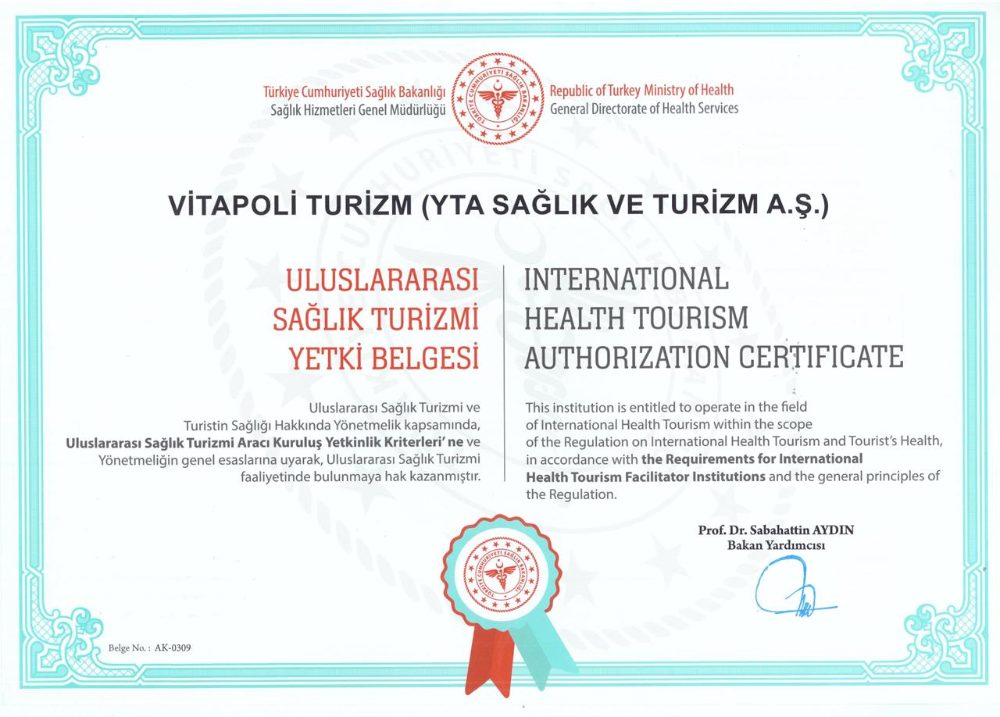
AYT Clinic (YTA Sağlık ve Turizm A.Ş.) is a licensed health tourism intermediary (licence no. AK-0309) that coordinates treatments in Antalya.
Make an Appointment
Talatpaşa Boulevard No: 113-9, Hacettepe Mahallesi, Altındağ / Ankara, Türkiye
Çalkaya Falezleri Cad. No: 2 Daire: 8, Altıntaş / Aksu / Antalya, Türkiye
Send Email: [email protected]
Call Us: +90 850 888 6898