FacebookInstagramYouTubeLinkedintiktok

Call Us 24/7:

+90 850 888 6898

Working Hours:

We Are Available 24/7

Logo

Zirconia Crowns vs Porcelain Veneers: Which Is Right for You?

Get a Free Price Quote

Share your details and our team will contact you shortly.

By clicking Submit, you agree to our Terms & Conditions and acknowledge our Privacy Policy.

A porcelain veneer is a thin shell bonded to the front of a tooth, mainly for appearance; a zirconia crown covers the whole tooth and also restores strength. Veneers usually need less tooth preparation, while crowns suit broken, heavily filled or weakened teeth. The right choice depends on the condition of each tooth, not the material alone. See our porcelain veneers in Antalya page for how treatment is planned.

What is the difference?

A zirconia crown is made from zirconium oxide, a strong, tooth-coloured ceramic. It covers the entire visible part of the tooth. The American Dental Association lists typical reasons for a crown: a large filling with little tooth left, a weak or cracked tooth that needs protection, a badly discoloured or misshapen tooth, or a tooth that anchors a bridge or sits on a dental implant [3].

A porcelain veneer covers only the front surface. The Oral Health Foundation describes veneers as thin coverings used mainly to improve appearance — for stains that do not respond to whitening, small chips, minor gaps or slightly uneven teeth [1]. The ADA adds that veneers may not suit people who grind or clench their teeth or who have a deep overbite [2].

A laboratory study on front teeth found that veneer preparations removed roughly 3–30% of the tooth crown by weight, compared with about 63–72% for full-coverage crown preparations [5]. This is why dentists usually reserve crowns for teeth that genuinely need the extra coverage.

Zirconia crowns vs porcelain veneers at a glance


Zirconia crown Porcelain veneer
What it covers The whole visible tooth The front surface only
Main purpose Strength and appearance Appearance
Tooth preparation More extensive, all sides Less, mainly the front (still involves enamel removal) [2, 5]
Typical cases Broken, heavily filled, root-treated or weak teeth; implant tops; bridges Discolouration, small chips, minor gaps or shape changes on healthy teeth
Reversible? No No — enamel removal cannot be undone [2]
Bruxism (grinding) Often considered, with a night guard May not be suitable [2]
Common problems Chipping, loss of retention, sensitivity [6] Chipping or fracture, debonding [7]
Starting price at AYT From £120 per tooth From £185 per tooth

Prices are starting prices per tooth. Your final quote depends on your examination and is set out in your personal plan.

Who each option may suit

Zirconia crowns may be suggested if:

  • a tooth is cracked, broken or has a large old filling;
  • a tooth has had root canal treatment and needs protection;
  • you need a bridge or a restoration on top of an implant;
  • you want to change the colour and shape of a back tooth that takes heavy chewing forces.

Porcelain veneers may be suggested if:

  • your front teeth are healthy but discoloured, slightly chipped or uneven;
  • whitening has not given the shade you want;
  • your bite is suitable and you do not grind your teeth heavily.

Neither may be the first step if you have untreated decay or gum disease. These are usually treated before any crown or veneer is made [2]. In some cases whitening, bonding or orthodontics may be discussed as less invasive alternatives.

A smile makeover often combines both: crowns on weaker teeth and veneers on healthier ones. The plan is decided tooth by tooth.

The treatment process

  1. Consultation and records. Photos and, if available, a recent X-ray help the dental team give a first opinion. In Antalya, an in-person examination and X-rays confirm which teeth need what.
  2. Preparation. The tooth is shaped under local anaesthesia. For a veneer, a thin layer of enamel is removed from the front; for a crown, the tooth is reduced on all sides [1, 2].
  3. Scan or impression and shade selection. A digital scan or impression goes to the dental laboratory. You may wear temporary teeth while the final restorations are made [2].
  4. Try-in and fitting. Fit, bite and colour are checked before the crown is cemented or the veneer is bonded [1].
  5. Bite check and review. Small adjustments are common in the first days.

Because the laboratory work happens between visits, dental treatment usually involves at least two appointments separated by several days. Your exact schedule is given in your personal plan.

Recovery and adaptation

Dental restorations do not involve a surgical recovery, but there is an adjustment period:

  • Days 1–3: the gums may feel tender and teeth may be sensitive to hot and cold. Over-the-counter pain relief is usually enough.
  • Week 1: your tongue and lips adapt to the new shape. Speech may feel slightly different for a few days.
  • Weeks 1–2: your bite settles. If any tooth feels "high" when you bite, tell the dentist; a small adjustment can help.
  • Long term: brush twice daily with fluoride toothpaste, clean between teeth, avoid biting hard objects, and wear a mouthguard for contact sport or a night guard if advised [2]. Decay can still form at the edges of crowns and veneers, so regular check-ups at home remain important [1, 2].

Risks (general)

  • Sensitivity after preparation, which usually settles.
  • Chipping, cracking or debonding. In a meta-analysis of ceramic veneers, fracture or chipping was the most frequent complication [7]. A systematic review of single crowns reported that earlier zirconia crowns with a porcelain layer had more technical problems such as chipping and loss of retention [6].
  • Gum irritation at the margins if hygiene is difficult.
  • Nerve problems. Teeth that are heavily prepared can occasionally need root canal treatment later.
  • Colour mismatch with neighbouring natural teeth over time.
  • Irreversibility. Once enamel is removed, the tooth will always need a covering [2].

Restorations do not last forever; they may need repair or replacement in the future [1].

How the process is planned in Antalya (general)

AYT Clinic is a licensed medical tourism facilitator (YTA Sağlık ve Turizm A.Ş.), not a clinic. We coordinate your care with licensed partner dental clinics in Antalya:

  1. You send smile photos and any recent X-rays.
  2. The dental team suggests which teeth may need crowns, veneers or other treatment. This becomes a draft plan with a starting quote.
  3. You confirm dates. The number of days to allow between appointments, transfers and aftercare are stated in your personal plan.
  4. In Antalya, the examination confirms or adjusts the plan before any tooth is prepared, and you sign consent.
  5. You receive written aftercare advice and a record of the materials used, which is useful for your dentist at home.

The British Dental Association advises patients considering treatment abroad to check qualifications, understand the risks and alternatives, and plan what to do if problems arise after returning home [4]. We encourage the same. If you have questions, ask us before you book.

Questions to ask before you book

  • Which teeth are planned for crowns, which for veneers, and why?
  • How much tooth preparation is expected for each tooth?
  • Which material and laboratory will be used, and will I receive a written record?
  • What happens if a crown or veneer chips or comes loose after I return home?
  • Is any treatment needed first, such as fillings, gum care or root canal treatment?
  • How many appointments are planned, and how many days apart?

Getting these answers in writing makes it easier to compare plans on the same terms [8].

Frequently asked questions

Are zirconia crowns stronger than veneers?

A crown covers the whole tooth, so it is generally used where strength is needed. A veneer is thinner and designed for the front surface. Strength alone should not decide; the condition of the tooth does.

Can I have veneers if I grind my teeth?

Grinding increases the risk of chipping. The ADA notes veneers may not suit people who clench or grind [2]. Your dentist may suggest a night guard or a different option.

How long do veneers and crowns last?

Both can last many years with good care, but neither lasts indefinitely [1]. Studies report high survival rates over several years, with chipping as a common reason for repair [6, 7].

Is the treatment reversible?

No. Both involve removing some enamel, so the tooth will need a restoration from then on [2].

How much does it cost?

At AYT, zirconia crowns start from £120 per tooth and porcelain veneers from £185 per tooth. Your final price depends on the examination and is confirmed in your personal plan.

Next step

Compare the details on our zirconia crowns and porcelain veneers pages, then send us your smile photos. We will tell you which option the dental team suggests for each tooth.

Sources

Tüm URL'ler 13.11.2026'da kontrol edildi (HTTP 200, PubMed E-utilities kaydı veya web araması ile).

  1. Oral Health Foundation – Veneers (published 6 Jan 2017, updated 17 Apr 2026). https://www.dentalhealth.org/veneers
  2. American Dental Association (ADA) – MouthHealthy: Veneers. https://www.mouthhealthy.org/all-topics-a-z/veneers/
  3. American Dental Association (ADA) – MouthHealthy: Crowns. https://www.mouthhealthy.org/all-topics-a-z/crowns/
  4. British Dental Association (BDA) – "UK dentists picking up the pieces from dental tourism boom" (press release). https://bda.org/media-centre/uk-dentists-picking-up-the-pieces-from-dental-tourism-boom
  5. Edelhoff D, Sorensen JA. Tooth structure removal associated with various preparation designs for anterior teeth. J Prosthet Dent 2002;87:503–509. doi:10.1067/mpr.2002.124094. https://pubmed.ncbi.nlm.nih.gov/12070513/
  6. Sailer I, Makarov NA, Thoma DS, Zwahlen M, Pjetursson BE. All-ceramic or metal-ceramic tooth-supported fixed dental prostheses (FDPs)? A systematic review of the survival and complication rates. Part I: Single crowns. Dent Mater 2015;31:603–623. doi:10.1016/j.dental.2015.02.011. https://pubmed.ncbi.nlm.nih.gov/25842099/
  7. Morimoto S, Albanesi RB, Sesma N, Agra CM, Braga MM. Main clinical outcomes of feldspathic porcelain and glass-ceramic laminate veneers: a systematic review and meta-analysis of survival and complication rates. Int J Prosthodont 2016;29:38–49. doi:10.11607/ijp.4315. https://pubmed.ncbi.nlm.nih.gov/26757327/
  8. NHS – Treatment abroad checklist. https://www.nhs.uk/using-the-nhs/healthcare-abroad/going-abroad-for-treatment/treatment-abroad-checklist/

Medically Reviewed by

Adil Saraç

Dentist

Last updated: 14.11.2026

Call Now
Logo

AYT Clinic

AYT Clinic (YTA Sağlık ve Turizm A.Ş.) is a licensed health tourism intermediary (licence no. AK-0309) that coordinates treatments in Antalya.

Make an Appointment

Contact Us

Talatpaşa Boulevard No: 113-9, Hacettepe Mahallesi, Altındağ / Ankara, Türkiye

Çalkaya Falezleri Cad. No: 2 Daire: 8, Altıntaş / Aksu / Antalya, Türkiye

Send Email: [email protected]

Call Us: +90 850 888 6898
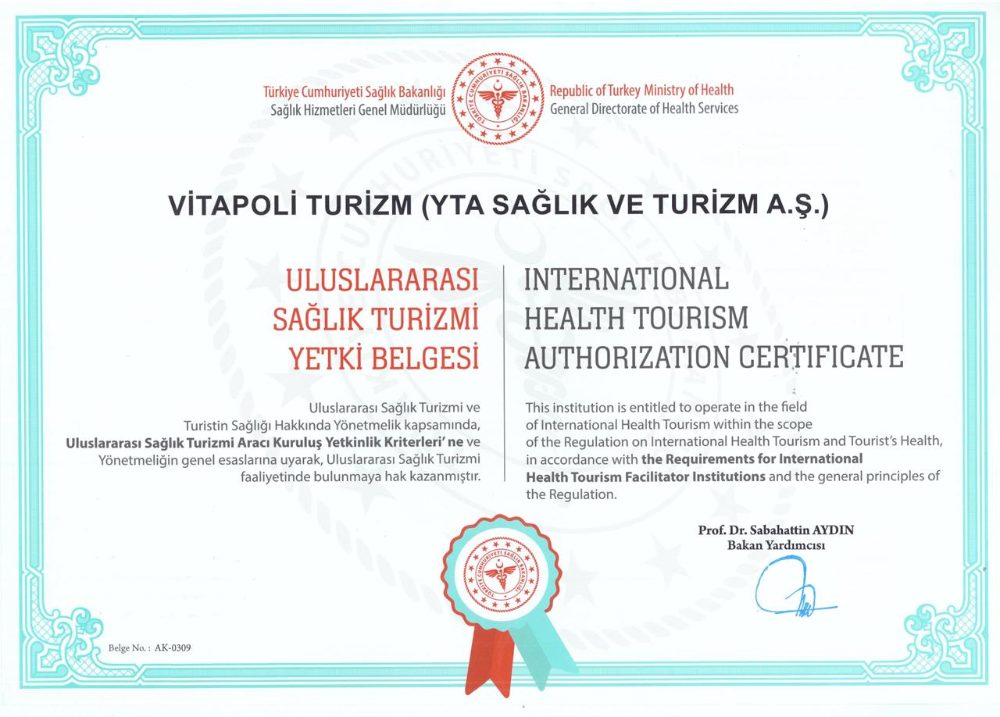
Sağlık Turizm Belgesi
Health Türkiye
JCI Kalite Onayı (Joint Commission International)
WhatClinic belge