 Book Online
Share your details and our team will contact you shortly.
Yes. Ear pinning is often done in childhood, but the NHS confirms adults can have it too [1]. It is usually done under local anaesthetic, takes about one to two hours, and most people go home the same day. Expect around two weeks of bruising, a headband in bed for several weeks and a shape that settles over months.
Otoplasty (also called pinnaplasty or ear correction surgery) changes the position, shape or size of the outer ear. The most common reason is prominent ears — ears that stick out further from the head than the person would like. Typical causes are an underdeveloped fold in the ear cartilage (the antihelical fold), a deep bowl-shaped part of the ear (the concha), or both.
The NHS describes two broad approaches [1]:
More than 200 techniques have been described, and reviews have not found a single method that suits everyone [5]. Your surgeon will choose an approach based on your cartilage and anatomy.
Adult otoplasty may be suitable if you:
It may not be suitable, or may need extra assessment, if you have a bleeding disorder, an active skin infection around the ears, a tendency to raised scars, or a medical condition that makes surgery or anaesthesia riskier. Some ear shapes (for example very small or constricted ears) need different reconstructive procedures.
The operation usually takes around one to two hours [1].
| Time after surgery | Typical milestone (based on NHS guidance [1]) |
|---|---|
| First days | Ears feel tender and may throb; pain relief such as paracetamol or ibuprofen is usually enough. Keep the bandage clean and dry; hair cannot be washed until it is removed. |
| Days 5–10 | Bandage and non-dissolvable stitches are removed. |
| Around 2 weeks | Bruising usually fades. Many adults return to desk-based work around this time, depending on the job. |
| Several weeks | A soft headband is often worn at night to protect the ears while you sleep. |
| 4–6 weeks | Swimming is usually possible. |
| Around 8 weeks | Contact sports are usually possible. |
| Several months | Stiffness and numbness gradually settle and the final shape becomes clear. |
Your own recovery timeline, including when to return to work and exercise, will be set out in your plan.
Once swelling settles, the ears sit closer to the head and the fold of the ear is usually more defined. Small differences between the two ears are normal, because no two ears are identical before surgery either. The shape continues to settle for several months while stiffness eases [1]. Photos taken before surgery and at follow-up help you and the surgeon judge the result objectively. If you notice the ears moving forward in the first weeks, contact the team early rather than waiting.
Common side effects include a small scar behind each ear, tender ears for several weeks, numbness or tingling, and bruising [1]. Possible complications include:
These figures come from published studies and are not predictions for an individual patient. Your surgeon will explain your own risk.
AYT Clinic is a licensed medical tourism facilitator (YTA Sağlık ve Turizm A.Ş.), not a clinic. We coordinate your care with licensed partner hospitals in Antalya:
On travel: the British Association of Aesthetic Plastic Surgeons (BAAPS) groups short local-anaesthetic procedures separately from longer operations under general anaesthesia, which need more time in the destination country [7]. Advice on flying after surgery for your case will be included in your plan. If anything is unclear, ask us before you book.
The NHS treatment abroad checklist is a useful guide when preparing these questions [2].
No. Otoplasty is commonly done in children, but adults can have it as well [1]. Suitability depends on your health and ear anatomy rather than age.
Most adults have local anaesthetic, so you are awake but the area is numb. Sedation or general anaesthesia may be options [1]; this will be agreed in your plan.
With open otoplasty, the scar sits in the crease behind the ear, where it is usually hard to see [1]. A small number of people develop raised scars [3].
Glasses can usually be worn carefully once the bandage is off. Helmets and contact sports are typically avoided for around eight weeks [1]. Your surgeon will confirm.
Partial recurrence can happen, more often in the first months. Published reviews report revision or recurrence in a minority of patients [3]. Following headband advice helps protect the result in the early weeks.
Read more about otoplasty in Antalya, then send us photos of your ears from the front, back and side. We will tell you which approach the surgical team suggests and what your plan would include.
Tüm URL'ler 13.11.2026'da kontrol edildi (HTTP 200 veya PubMed E-utilities kaydı).
Medically reviewed by Dr. Mehmet Ali Korkmaz, Plastic Surgeon.
Last updated: 14.11.2026
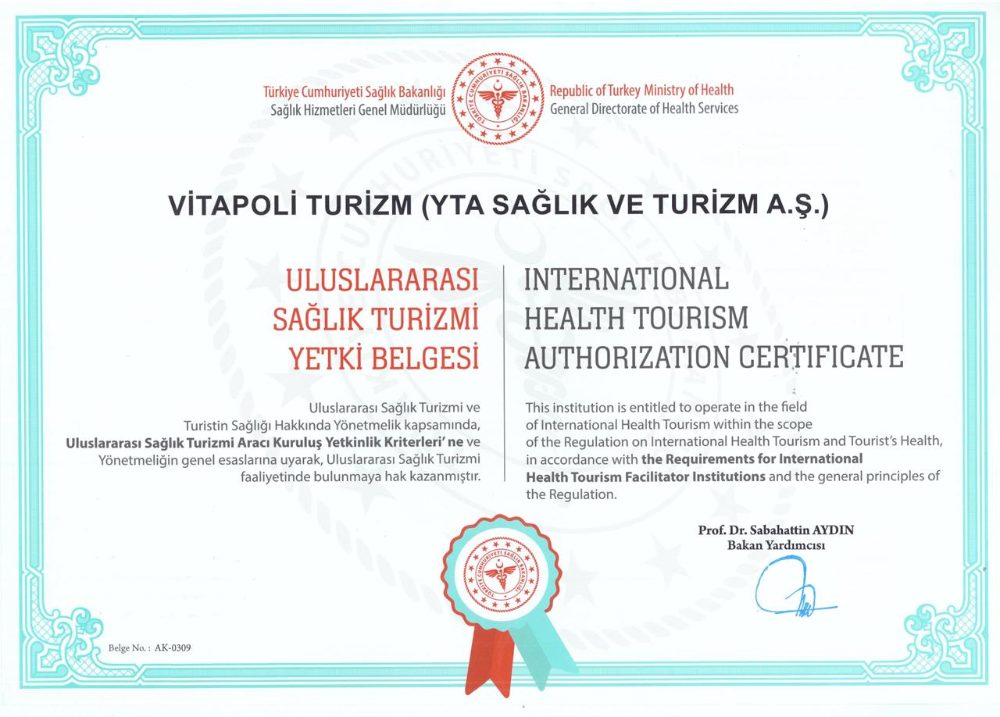
AYT Clinic (YTA Sağlık ve Turizm A.Ş.) is a licensed health tourism intermediary (licence no. AK-0309) that coordinates treatments in Antalya.
Make an Appointment
Talatpaşa Boulevard No: 113-9, Hacettepe Mahallesi, Altındağ / Ankara, Türkiye
Çalkaya Falezleri Cad. No: 2 Daire: 8, Altıntaş / Aksu / Antalya, Türkiye
Send Email: [email protected]
Call Us: +90 850 888 6898