 Book Online
Share your details and our team will contact you shortly.
Short answer: A BBL carries real risks wherever it is performed, including a rare but potentially fatal fat embolism. Plastic surgery societies say risk is lowest when fat is placed only in the layer under the skin, never into the muscle. Safety depends on the surgeon, technique and hospital — not on the country — so ask specific questions before you book.
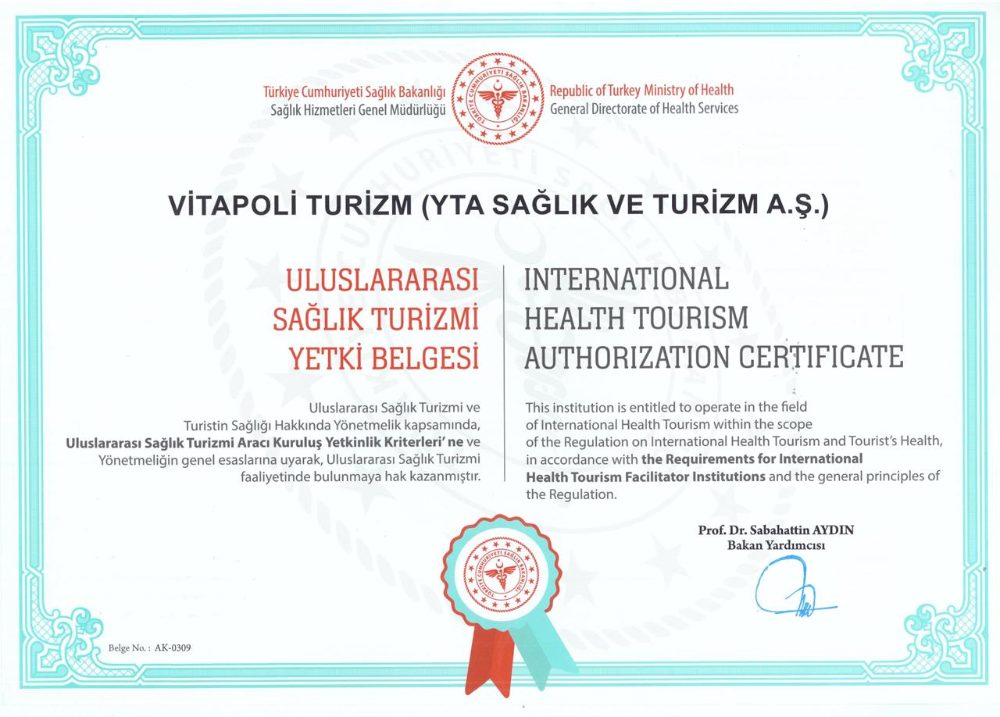
A Brazilian butt lift (BBL) moves your own fat, removed by liposuction, into the buttocks to change their shape and volume. It has received more safety warnings than most cosmetic procedures. This guide summarises what the American Society of Plastic Surgeons (ASPS) and the British Association of Aesthetic Plastic Surgeons (BAAPS) say, explains the main risks and gives you questions to ask your surgeon. AYT Clinic is a licensed health tourism facilitator (licence AK-0309), not a clinic: surgery is performed by partner doctors in partner hospitals.
Medically reviewed by Dr. Mehmet Ali Korkmaz, Plastic Surgeon.
Last updated: 14.11.2026
The most serious risk is a fat embolism: fat entering large veins in the buttock and travelling to the lungs or heart. A multisociety safety advisory signed by the ASPS and the Aesthetic Society states that research suggests mortality risk can be minimised when the entire procedure is confined to the subcutaneous space, with no violation of the gluteal muscle fascia, and urges both surgeons and the public to approach the procedure with extreme caution [1].
In 2018 BAAPS advised its members not to perform BBLs until more data were available. In 2022 it published a safety review and renamed the recommended approach superficial gluteal lipofilling (SGL) [2, 3]. BAAPS now estimates the mortality risk at nearer 1 in 15,000 rather than the earlier figure of 1 in 2,500 — similar to the mortality risk in a tummy tuck — and recommends that fat be placed only in the subcutaneous layer, guided by intraoperative ultrasound [2, 3].
That is reassuring compared with older figures, but it is not zero. Other risks listed by the ASPS include bleeding, infection, fluid collection (seroma), fat necrosis, asymmetry, blood clots, numbness, poor wound healing and the need for revision surgery [4].
Safety is not determined by a country. It depends on:
The NHS advises checking the surgeon's qualifications and experience, having consultations before surgery, and planning what happens if there are complications after you return home [5].
| # | Question | Why it matters |
|---|---|---|
| 1 | Who will perform my operation, and how many BBLs do you perform each year? | Experience with gluteal fat grafting is specific |
| 2 | Into which layer will the fat be injected? | Societies recommend the subcutaneous layer only, never the muscle [1, 2] |
| 3 | Do you use intraoperative ultrasound to check cannula position? | BAAPS recommends ultrasound guidance [2, 3] |
| 4 | How much fat do you plan to transfer, and would you stage it? | BAAPS suggests staging rather than injecting deep if more volume is needed [2] |
| 5 | In which hospital is the operation done, and is there an intensive care unit? | Emergency capacity matters if a complication occurs |
| 6 | Who gives the anaesthetic, and how am I monitored? | Monitoring during and after surgery |
| 7 | How do you reduce my blood-clot risk? | Clots are listed among BBL risks [4] |
| 8 | Am I a suitable candidate at my current weight and health? | Not everyone has enough donor fat or suitable health |
| 9 | When can I fly, and how do I sit during the journey? | Pressure on the buttocks must be limited early on |
| 10 | Who do I contact if I have a problem after returning home? | Aftercare continuity [5] |
Ask for the answers in writing as part of your treatment plan.
After a BBL you usually avoid sitting directly on your buttocks for a period your surgeon specifies, using a special cushion or lying on your side or front. You wear a compression garment, and walking early helps circulation. The NHS recommends not flying for 5 to 7 days after liposuction [5]; because a BBL combines liposuction and fat grafting, your surgeon will tell you when it is safe for you to fly and how to sit during the journey.
According to our BBL treatment page, a BBL in Antalya currently starts from £3,500 (≈ €4,100), with hotel and transfers included. The final price is confirmed after assessment. A lower price should never be the reason to accept a less safe technique.
Historically it had a higher mortality rate than most cosmetic procedures. BAAPS's 2022 review estimates the risk with superficial techniques at nearer 1 in 15,000, similar to a tummy tuck, but it remains a serious operation [2, 3].
SGL (superficial gluteal lipofilling) is the term BAAPS uses for a BBL in which fat is placed only in the subcutaneous layer, ideally under ultrasound guidance [3].
Some transferred fat is always reabsorbed in the first months. Results are not permanent and can change with weight gain or loss.
Most people plan around a week; your surgeon confirms your fit-to-fly date at your check-up. Your treatment plan shows the details.
Sometimes, but combining procedures increases operating time and risk. Read BBL and Mommy Makeover: Can They Be Performed Together?
Send your photos and medical history through the BBL page and include your questions from the table above. Your partner doctor will answer them in your treatment plan.
AYT Clinic (YTA Sağlık ve Turizm A.Ş.) is a licensed health tourism intermediary (licence no. AK-0309) that coordinates treatments in Antalya.
Make an Appointment
Talatpaşa Boulevard No: 113-9, Hacettepe Mahallesi, Altındağ / Ankara, Türkiye
Çalkaya Falezleri Cad. No: 2 Daire: 8, Altıntaş / Aksu / Antalya, Türkiye
Send Email: [email protected]
Call Us: +90 850 888 6898