FacebookInstagramYouTubeLinkedintiktok

Call Us 24/7:

+90 850 888 6898

Working Hours:

We Are Available 24/7

Logo

FUE vs DHI Hair Transplant in Turkey: Differences, Pros and Cons

Get a Free Price Quote

Share your details and our team will contact you shortly.

By clicking Submit, you agree to our Terms & Conditions and acknowledge our Privacy Policy.

FUE and DHI both remove follicles one by one using follicular unit extraction. The difference is how grafts go back in: classic FUE opens recipient sites first and places grafts with forceps, while DHI uses an implanter pen that creates the site and places the graft in one movement. Neither has been shown to grow hair better for everyone. See our DHI hair transplant in Antalya page for the procedure in detail.

What each term actually means

FUE (follicular unit extraction or excision) describes the harvesting step. The surgeon uses a small circular punch to release individual follicular units — natural groups of one to four hairs — from the back and sides of the scalp. Each unit is called a graft. The NHS notes that FUE leaves many tiny scars rather than one linear scar, which is why it has largely replaced the older strip method (FUT) for many patients [1].

DHI (direct hair implantation) is a marketing name rather than a separate medical technique. It usually refers to FUE harvesting combined with implanter pens — hollow-needle devices first described in Korea in the early 1990s. The pen is loaded with a graft, inserted into the scalp at the planned angle and depth, and the graft is pushed in as the pen is withdrawn [7, 8]. In other words, DHI is one way of doing the placement half of an FUE procedure.

So when people ask "FUE or DHI?", the real question is: forceps placement into pre-made sites, or implanter placement?

FUE vs DHI at a glance


Classic FUE (sites + forceps) DHI (implanter pens)
Harvesting Individual follicular units with a punch Same — individual follicular units with a punch
Recipient sites Opened in advance with a fine blade or needle Created by the pen as each graft is placed
Graft handling Grafts held with fine forceps Grafts loaded into pens, less direct gripping
Shaving Usually donor and recipient areas shaved Often possible to keep recipient hair longer; donor usually still trimmed
Typical use Large areas, high graft numbers Hairline refinement, density between existing hair, smaller sessions
Team workflow Site creation and placement are separate steps Pens must be loaded continuously; sessions can be slower
Evidence on growth No robust evidence that either method grows hair better for all patients [5, 7] Same

Who each approach may suit

There is no single "right" answer, and your surgeon should explain the choice for your scalp. In general terms:

Classic FUE may suit you if:

  • you need a larger area covered, such as the crown and mid-scalp together;
  • you are comfortable with shaving for a short time;
  • the surgeon wants to plan the full recipient pattern before any grafts are placed.

Implanter (DHI-style) placement may suit you if:

  • you want to add density between existing hairs and prefer not to shave the top;
  • the main goal is hairline design or a smaller, more targeted area;
  • your surgeon prefers pens for fragile FUE grafts, which some authors suggest reduces handling [7].

Neither may be right yet if your hair loss is still progressing quickly, your donor area is limited, or there is an untreated scalp or medical condition. Medical therapy and a period of observation are sometimes discussed first [1, 5].

What happens during the procedure

  1. Consultation and planning. Your scalp, donor density and hair-loss pattern are assessed, usually with photos first and then in person. The graft estimate and the planned technique are written into your treatment plan.
  2. Design and anaesthesia. The hairline and recipient zones are marked. Hair transplants are usually carried out under local anaesthesia, sometimes with sedation [1].
  3. Harvesting. Grafts are extracted from the donor area one by one and kept in a cooled storage solution.
  4. Placement. With classic FUE, recipient sites are opened first and grafts are inserted with forceps. With DHI, pens loaded with grafts create each site and place the graft at the same time.
  5. Dressing and instructions. You receive written aftercare instructions covering washing, sleeping position and medicines.

A note on Turkish regulation. Under Turkish rules, creating recipient sites (often called "channel opening") is a physician's step and cannot be handed to non-medical staff. International guidance from the ISHRS also lists recipient-site creation and donor harvesting as physician tasks [2]. Because implanter pens create the site as they place the graft, ask in writing who will perform each step on the day.

Recovery: day by day and week by week

Recovery is similar whichever placement method is used. Typical milestones described by the NHS are [1]:

  • Days 1–5: tight, swollen or achy scalp; small scabs form. Dressings usually come off within two to five days. Do not touch the grafts.
  • Around day 6: gentle washing as instructed.
  • Weeks 1–2: grafts are still settling, so avoid friction, heavy exercise and anything that knocks the scalp. Many people take one to two weeks away from work.
  • Weeks 2–8: transplanted hairs often shed. This is expected and does not mean the grafts have failed.
  • Around month 4: new hair usually begins to appear.
  • Months 10–18: the full result is usually visible.

Your personal recovery timeline and restrictions will be set out in your plan.

Risks (general)

All hair transplant methods share the same core risks [1, 9]:

  • bleeding, infection or reaction to the anaesthetic;
  • swelling of the forehead and around the eyes for a few days;
  • temporary numbness, itching or folliculitis (inflamed hair follicles);
  • some grafts not surviving, giving lower density than hoped;
  • visible scarring or over-harvesting of the donor area if too many grafts are taken;
  • an unnatural hairline if design or angles are poor;
  • continued loss of your own non-transplanted hair around the grafts.

Surgeon judgement, donor management and team experience matter more than the label "FUE" or "DHI".

How the process is planned in Antalya (general)

AYT Clinic is a licensed medical tourism facilitator (YTA Sağlık ve Turizm A.Ş.), not a clinic. We coordinate your treatment with licensed partner facilities in Antalya. A typical planning sequence looks like this:

  1. You send photos of your hair from several angles and a short medical history.
  2. The treating team reviews them and proposes a technique and graft range. This is written into a personal plan.
  3. You confirm travel dates. The number of days you should allow in Antalya, transfers and the follow-up schedule are stated in your personal plan.
  4. On the day, you meet the treating doctor, review the design and sign consent.
  5. After you return home, follow-up continues remotely with photo check-ins at agreed intervals.

If anything is unclear — the expected graft number, who does each step, or how follow-up works — ask us before you book.

Questions to ask before you book

Whichever method is proposed, these questions help you compare offers on substance rather than on labels:

  • Which placement method is planned for my case, and why does it suit my scalp?
  • What graft range is estimated, and how was it calculated from my donor area?
  • Which steps will the doctor perform personally, and which will the team assist with?
  • How is the donor area protected from over-harvesting, and is a future session considered?
  • Is any medical therapy recommended before or after the procedure?
  • What does follow-up look like after I go home, and who do I contact if I have a concern?

A 2023 joint statement by UK hair-restoration and plastic-surgery associations and their Turkish counterpart adds that the operating doctor should plan the harvesting method, graft number and hairline, and that patients should have time to review the recommendation and consent form before paying [11]. The NHS treatment abroad checklist is also a useful companion [4].

Frequently asked questions

Is DHI better than FUE?

Not in a general sense. Both use the same harvesting technique. Published reviews describe advantages and trade-offs for each placement method but do not show that one gives better growth for every patient [5, 7].

Can I have a hair transplant without shaving?

Sometimes. Implanter pens make it easier to place grafts between existing hair. The donor area usually still needs trimming, although unshaven harvesting is possible in selected cases [10]. Ask whether it suits your plan.

How many grafts will I need?

It depends on the size of the area, your donor density and your goals. The number is estimated after photo review and confirmed in person.

When can I fly home?

Flight timing depends on your procedure and how you feel; your plan will state when you can travel. Bring loose clothing and protect the grafts during the journey.

When will I see the final result?

New growth usually starts around four months, and the full result is generally seen between 10 and 18 months [1].

Next step

Read more about FUE hair transplant and DHI hair transplant, then send us your photos. We will tell you which approach the treating team suggests for your scalp and why.

Sources

Tüm URL'ler 13.11.2026'da kontrol edildi (HTTP 200 veya PubMed E-utilities ile kayıt doğrulaması).

  1. NHS – Hair transplant (last reviewed 29 Sep 2023). https://www.nhs.uk/tests-and-treatments/cosmetic-procedures/cosmetic-surgery/hair-transplant/
  2. ISHRS – Position statement on qualifications for scalp surgery (revised 13 Jul 2024). https://ishrs.org/ishrs-position-statement-on-qualifications-for-scalp-surgery/
  3. ISHRS – Consumer alert. https://ishrs.org/consumer-alert-false-advertising/
  4. NHS – Treatment abroad checklist. https://www.nhs.uk/using-the-nhs/healthcare-abroad/going-abroad-for-treatment/treatment-abroad-checklist/
  5. Jimenez F, Vogel JE, Avram M. CME article Part II. Hair transplantation: surgical technique. J Am Acad Dermatol 2021;85:818–829. doi:10.1016/j.jaad.2021.04.063. https://pubmed.ncbi.nlm.nih.gov/33915242/
  6. Lam SM. Follicular unit excision (FUE) basics. Facial Plast Surg 2024;40:158–167. doi:10.1055/a-2179-4729. https://pubmed.ncbi.nlm.nih.gov/37734402/
  7. Speranzini M, Souza SEG. Advancements in graft placement techniques. Facial Plast Surg 2024;40:223–233. doi:10.1055/a-2198-2782. https://pubmed.ncbi.nlm.nih.gov/37879353/
  8. Park JH, Ho YH, Manonukul K. A practical guide to hair graft placement using the sharp implanter method. Clin Cosmet Investig Dermatol 2023;16:1777–1785. doi:10.2147/CCID.S411488 (PMC10349607). https://pubmed.ncbi.nlm.nih.gov/37456803/
  9. Garg AK, Garg S. Complications of hair transplant procedures – causes and management. Indian J Plast Surg 2021;54:477–482. doi:10.1055/s-0041-1739255 (PMC8719980). https://pubmed.ncbi.nlm.nih.gov/34984088/
  10. Park JH, You SH, Kim NR. Nonshaven follicular unit extraction: personal experience. Ann Plast Surg 2019;82:262–268. doi:10.1097/SAP.0000000000001679 (PMC6392215). https://pubmed.ncbi.nlm.nih.gov/30418195/
  11. BAAPS (with BAHRS, BAPRAS and TSPRAS) – UK and Turkish medical associations unite to issue minimum guidelines for hair transplant surgery (13 Dec 2023). https://baaps.org.uk/about/news/1883/uk_and_turkish_medical_associations_unite_to_issue_minimum_guidelines_for_hair_transplant_surgery/

Reviewed by

Pelin Gültekin

Hair Transplant Specialist

Last updated: 14.11.2026

Call Now
Logo

AYT Clinic

AYT Clinic (YTA Sağlık ve Turizm A.Ş.) is a licensed health tourism intermediary (licence no. AK-0309) that coordinates treatments in Antalya.

Make an Appointment

Contact Us

Talatpaşa Boulevard No: 113-9, Hacettepe Mahallesi, Altındağ / Ankara, Türkiye

Çalkaya Falezleri Cad. No: 2 Daire: 8, Altıntaş / Aksu / Antalya, Türkiye

Send Email: [email protected]

Call Us: +90 850 888 6898
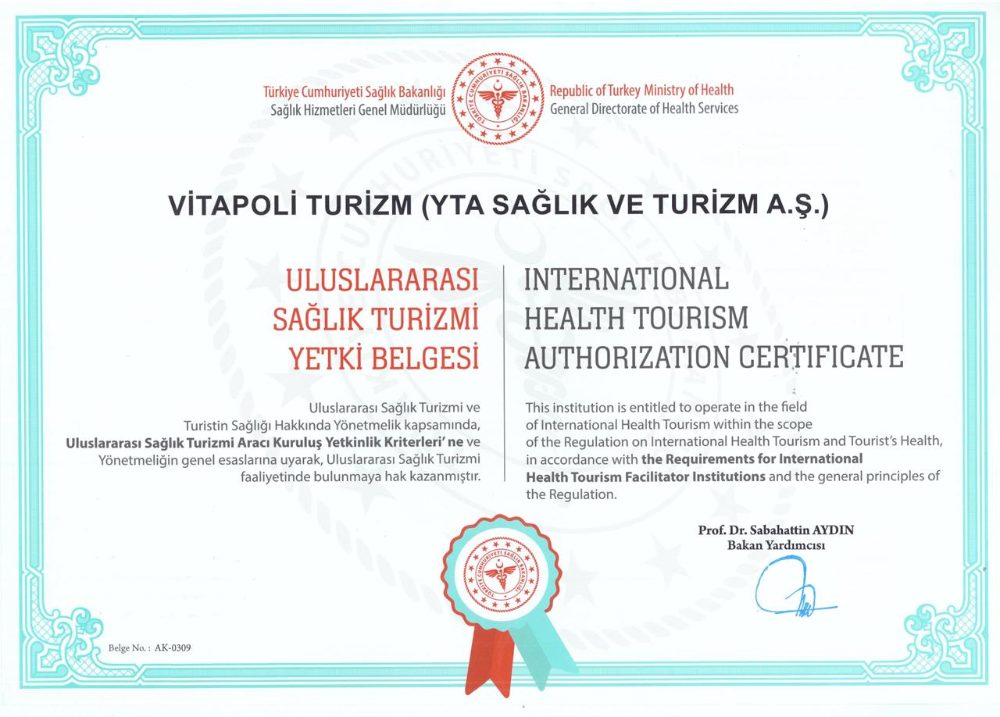
Sağlık Turizm Belgesi
Health Türkiye
JCI Kalite Onayı (Joint Commission International)
WhatClinic belge