 Book Online
Share your details and our team will contact you shortly.
It depends on where the heaviness comes from. Upper blepharoplasty removes excess skin, and sometimes fat, from the upper eyelid. A brow lift raises eyebrows that have descended and push skin down onto the lid. Many people have a mix of both. Your surgeon decides after examining the brow and eyelid together.
Hooded upper eyelids are one of the most common reasons people ask about eye-area surgery. The trouble is that two different problems can look almost identical in the mirror. This guide explains the difference, who each procedure tends to suit, how recovery compares, and why surgeons often examine the brow and eyelid as one unit.
The upper eyelid and the eyebrow are connected. When the brow descends with age, skin from the forehead and brow area can fold down onto the eyelid, increasing the hooded look. BAAPS describes this as skin folding onto the lid "like a roller blind" as the brows come down.
Three different situations are often confused:
ASPS also notes that a drooping upper lid may actually be caused by relaxation of the forehead skin and eyebrow, which is why a full facial assessment matters.
Look straight ahead in a mirror with a relaxed forehead. Then gently raise your eyebrows with your fingertips to where you feel they used to sit. If most of the hooding disappears, the brow may be contributing. If a fold of loose eyelid skin remains, excess lid skin may be part of the picture. Many people notice both. This is only a prompt for your consultation; it cannot replace an examination by a surgeon.
ASPS lists eyelid surgery as a procedure that can be performed alongside a brow lift, and ISAPS notes that some targeted brow lift techniques can even be performed through upper blepharoplasty incisions. BAAPS adds an important point: blepharoplasty does not change brow position, and after excess skin is removed the forehead muscle may relax and the brow may settle lower. That is why surgeons look at the brow before removing eyelid skin.
General good-candidate criteria from ASPS apply to both: good general health, no conditions that impair healing, not smoking, realistic goals and no serious eye conditions.
| Upper blepharoplasty | Brow lift | |
|---|---|---|
| What it changes | Removes excess upper-lid skin and sometimes small fat pockets | Repositions the eyebrows and the surrounding soft tissue upwards |
| Typical incision | In the natural upper eyelid crease | Depends on technique: hairline, temple (temporal lift), above the brow, endoscopic ports, or through the eyelid incision |
| Duration (ISAPS) | Typically 1–2 hours | Typically 1–2 hours |
| Anaesthesia | Local, sedation or general, depending on the plan | Local, sedation or general, depending on the plan |
| Does it lift the brow? | No | Yes |
| Does it remove lid skin? | Yes | Not directly; it reduces the skin pushed down by the brow |
The exact technique depends on your anatomy and is decided by your surgeon.
The figures below come from ISAPS, ASPS and the NHS. They are typical ranges, not promises.
| Time | Upper blepharoplasty | Brow lift |
|---|---|---|
| First 48 hours | Cold compresses, eye drops or ointment, head raised while sleeping | A drain, if used, is usually removed within 2 days; compression dressing typically not needed beyond 48 hours |
| Around 1 week | Stitches, if used, usually removed after about a week | Stitches or clips usually removed at 7–10 days |
| 1–2 weeks | Most swelling resolves within about 2 weeks; many return to work in 5–10 days (NHS: about 2 weeks) | Bruising and swelling usually subside within about 2 weeks; return to work often 7–14 days |
| 2–3 weeks | Contact lenses usually possible again after about 2 weeks | Healing continues as swelling resolves |
| 3+ weeks | Avoid strenuous exercise and alcohol for at least 3 weeks | Avoid strenuous activity for at least 3 weeks |
| 3–4 months | Final result usually visible | Final result develops; an initial "over-lifted" look commonly softens |
Bruising and redness after eyelid surgery can take several weeks to fade completely, according to the NHS. BAAPS notes that eyelid numbness usually resolves over 9 to 12 months.
Both procedures carry the general risks of surgery: bleeding (including a haematoma), infection, reaction to anaesthesia and blood clots.
Upper blepharoplasty (NHS, ISAPS, BAAPS): dry or irritated eyes, temporary difficulty closing the eyes, uneven eyelids, visible scarring, changes in sensation, and rarely blurred or double vision or bleeding behind the eye, which needs urgent treatment. BAAPS notes that removing skin can sometimes unmask an existing eyelid ptosis.
Brow lift (ISAPS): hair thinning or loss near the incision, contour irregularities, raised or thickened scarring, nerve injury affecting sensation or movement, and asymmetry.
With either procedure, the result may not be what you hoped for, and revision surgery is sometimes needed. Contact your team urgently if you have increasing pain, rapidly growing swelling, or any change in vision.
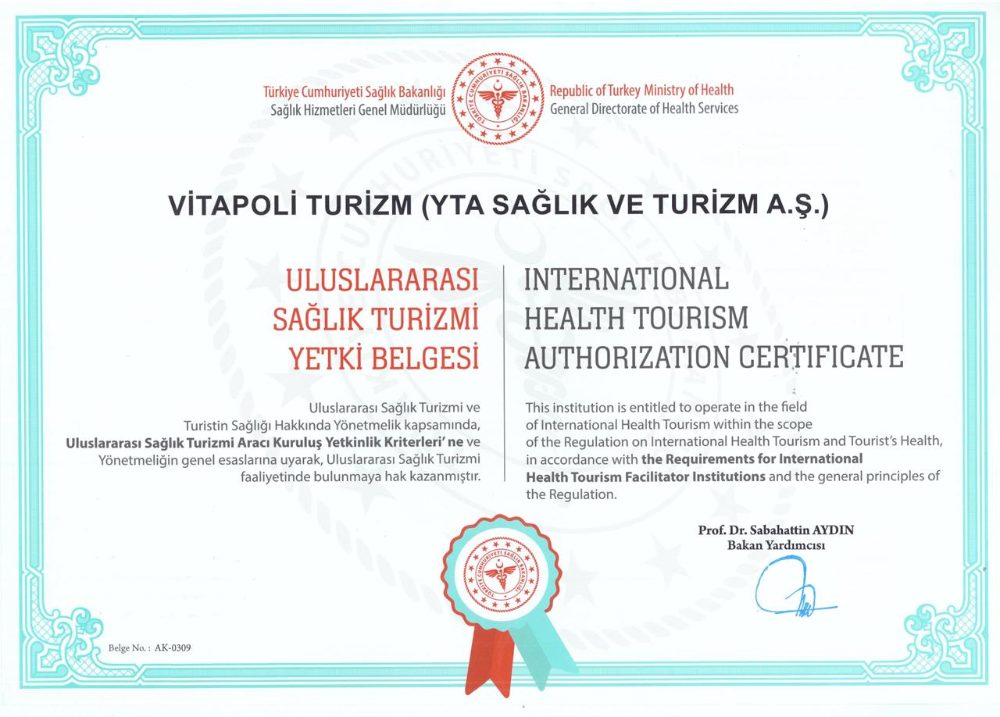
AYT Clinic is a licensed health tourism facilitator. We coordinate your travel; the operation is performed by the surgeon and hospital named in your plan.
No. Upper blepharoplasty removes eyelid skin and sometimes fat; it does not raise the brow. If the brow is low, removing lid skin alone may not give the result you expect, and your surgeon may discuss a brow lift.
Yes, they are often combined when both the brow and the eyelid contribute. Whether that is right for you is decided by your surgeon.
The early recovery is similar: about one to two weeks of visible bruising and swelling. A brow lift can involve a little more scalp or forehead numbness and a slightly longer time before you feel back to normal, depending on technique.
Sometimes. ISAPS notes that excess eyelid skin can interfere with vision, and ASPS notes that a drooping brow can contribute to upper-lid hooding. Your surgeon or an eye specialist can assess this.
Both procedures can give long-lasting improvement, but the face continues to age. How long a result lasts varies between individuals and is not something any surgeon can guarantee.
Read more on our brow lift and eyelid aesthetics pages. Send us your photos and questions, and we will explain how a personal plan is prepared.
Related reading: Who is a good candidate for upper blepharoplasty? and Upper blepharoplasty recovery timeline day by day.
This article is for general information and does not replace a consultation with a qualified surgeon.
Medically reviewed by Dr. Mehmet Ali Korkmaz, Plastic Surgeon.
Last updated: 14.11.2026
AYT Clinic (YTA Sağlık ve Turizm A.Ş.) is a licensed health tourism intermediary (licence no. AK-0309) that coordinates treatments in Antalya.
Make an Appointment
Talatpaşa Boulevard No: 113-9, Hacettepe Mahallesi, Altındağ / Ankara, Türkiye
Çalkaya Falezleri Cad. No: 2 Daire: 8, Altıntaş / Aksu / Antalya, Türkiye
Send Email: [email protected]
Call Us: +90 850 888 6898