 Book Online
Share your details and our team will contact you shortly.
Bariatric revision surgery in Turkey is one of the fastest-growing reasons patients travel to Antalya, and it is also the least understood. Searches such as "gastric sleeve revision Turkey", "gastric bypass revision surgery Turkey" and "band to sleeve revision Turkey" usually come from people who had a first weight loss operation years ago, often in another country, and now face weight regain, severe reflux or a band that no longer works. This guide explains when a revision is considered, which operations are used to convert or repair a previous procedure, why revision surgery is more demanding than a first operation, and how the process is organised at AYT Clinic in Antalya.
A revision is never the first answer to a disappointing result. Before any surgeon recommends a second operation, the reasons for the problem need to be understood, because a revision only helps when the cause is anatomical or when the first procedure was simply the wrong one for the patient. The most common reasons patients ask about bariatric revision surgery in Turkey fall into four groups.
Some patients lose less than expected after a sleeve or bypass, and a larger group regain a significant part of the lost weight after three to five years. In some cases the sleeve has stretched or the gastric pouch and its outlet have widened; in others the problem is dietary and behavioural rather than surgical. Our article on weight regain after gastric sleeve explains how surgeons tell the two apart. Only when the anatomy has changed, or when the original operation offers too little metabolic effect for the patient's situation, does a revision become a reasonable option.
A sleeve gastrectomy raises pressure inside the narrow stomach tube, and a proportion of patients develop new or worsening acid reflux that no longer responds to medication. Persistent reflux can damage the lining of the oesophagus, so when endoscopy confirms oesophagitis or Barrett's changes, converting the sleeve to a gastric bypass is the standard surgical answer, because a bypass diverts acid away from the oesophagus. More on the condition itself is in our guide to acid reflux after gastric sleeve.
Adjustable gastric bands were widely implanted in the 2000s and many are now causing problems: slippage, erosion into the stomach wall, pouch dilation, food intolerance with vomiting, or simply inadequate weight loss. Removing the band and converting to a sleeve or a bypass is the most frequent revision operation performed today.
After a bypass, revision may be discussed for recurrent dumping syndrome or reactive hypoglycaemia that does not respond to dietary changes, for a narrowed or ulcerated connection between pouch and bowel, for an enlarged pouch, or for severe long-term nutritional problems. These situations are individual and need careful investigation before any decision.
The right revision depends on which operation you had, what went wrong and what your goals are. Every plan is individual, but the operations below cover most situations treated at AYT Clinic.
The band and its port are removed, scar tissue around the upper stomach is released, and the stomach is converted either to a sleeve or to a Roux-en-Y gastric bypass. If the stomach wall is inflamed or thickened where the band sat, the surgeon may prefer a two-stage approach: band removal first, conversion a few months later once the tissue has healed. A one-stage conversion is possible when the tissue looks healthy during the operation.
Converting a sleeve to a gastric bypass is the most common revision for reflux and for weight regain with a dilated sleeve. The upper part of the sleeve becomes the pouch and is joined to a loop of small bowel, either as a classic Roux-en-Y bypass or as a one-anastomosis (mini) bypass. The choice between the two depends on reflux severity, BMI, previous operations and the surgeon's assessment during the work-up.
Revising an existing bypass may mean reducing an enlarged pouch, repairing or re-creating the connection to the bowel, lengthening the bypassed segment to increase the metabolic effect, or converting to a different procedure. Re-sleeving a dilated sleeve is also possible in selected cases. These are the most technically demanding revisions and are only offered after a full set of investigations.
Every previous operation leaves adhesions, altered blood supply and scarred tissue around the stomach. Operating in that field takes longer, carries a higher risk of bleeding and staple-line leak than a primary procedure, and demands a surgeon who performs revisions regularly rather than occasionally. For the same reason, a responsible clinic will not quote a revision from photographs alone. Before accepting a revision patient, the team at AYT Clinic asks for the original operation report, current medication and blood results, and arranges an upper endoscopy, a contrast swallow study and, where needed, a CT scan to see exactly what the anatomy looks like now. A dietitian reviews protein, vitamin and mineral status, because many revision patients arrive with deficiencies that have to be corrected before surgery.
The process starts remotely. You send your previous operation report, discharge letter, recent blood tests and, if available, endoscopy results, together with your weight history and current symptoms. The bariatric surgeon reviews the file and tells you honestly whether a revision is likely to help and which option is being considered, or whether a non-surgical approach should be tried first. Only then is a provisional plan and a personalised quote prepared.
In Antalya you are collected from the airport and seen the following day for a face-to-face consultation, blood tests, an anaesthesia assessment and the planned endoscopy or imaging. Surgery is carried out laparoscopically in a fully licensed hospital with an intensive care unit, and you stay three nights in hospital, as in the primary packages, followed by one night in the hotel; your surgeon may advise an additional night if the staple lines and connections need longer monitoring. A leak test and a liquid-diet start are completed before discharge. You then spend the included hotel night and are reviewed by the surgeon before being cleared to fly, typically on day five or six; extra hotel nights can be added if you prefer a longer stay. The full gastric revision surgery page describes the package, and the clinic's written revision policy and complication insurance explain how any complication would be handled after you return home.
Revision surgery cannot be priced from a list, because the operation, its duration and the hospital stay vary from one patient to the next. AYT Clinic therefore confirms the cost as a personalised quote after the consultation and review of your records. For orientation only, a primary gastric sleeve at the clinic starts from £2,400 (≈ €2,800) and a primary gastric bypass from £2,900 (≈ €3,400), hotel and transfers included; a revision is generally priced above the corresponding primary procedure because of the additional investigations, operating time and, where needed, additional hospital nights. To receive an accurate quote, send your original operation report (or at least the name of the procedure, the year and the country), your current height and weight, your lowest weight after the first operation, a list of symptoms such as reflux, vomiting or hypoglycaemia, current medication, and any endoscopy or scan reports you have.
Expectations should be realistic. Weight loss after a revision is usually smaller than after a first bariatric operation, because the body has already adapted once, and the main benefit is often the resolution of a problem rather than a dramatic change on the scales: reflux typically improves markedly after conversion of a sleeve to a bypass, band symptoms disappear once the band is removed, and dumping often settles after a bypass revision. Long-term success still depends on the same factors as the first time, namely regular follow-up, lifelong supplements, protein intake and physical activity. Patients who treat the revision as a second chance to build those habits achieve the most lasting results.
Yes. Most revision patients at AYT Clinic had their first operation elsewhere. What matters is that you can provide the operation report or at least a reliable description of the procedure, and that you complete the pre-operative investigations in Antalya.
There is no fixed waiting time. Conversion for reflux can be considered once medical treatment has clearly failed and endoscopy shows damage; conversion for weight regain is normally discussed after at least two years, once dietary and behavioural causes have been addressed.
Not always. If the stomach wall around the band is inflamed or scarred, the surgeon removes the band first and performs the conversion in a second operation a few months later. A one-stage conversion is chosen when the tissue looks healthy.
Yes, modestly. Adhesions and scarred tissue increase the risk of bleeding, leak and longer operating time, which is why the investigations before surgery and the surgeon's revision experience matter so much. Close monitoring during the hospital nights is part of managing that risk.
Plan for about six days: one or two days of investigations, surgery, three hospital nights, one hotel night and a final review before the surgeon clears you to fly; extra hotel nights can be added.
Usually not. Revision patients typically lose a meaningful but smaller amount of weight than after a primary operation. If your main problem is reflux, band intolerance or dumping, the resolution of those symptoms is the primary goal, with weight loss as a secondary benefit.
Related terms in our patient glossary: Sleeve gastrectomy (gastric sleeve) · Acid reflux after gastric sleeve · Gastric bypass · Weight regain after gastric sleeve · Revision surgery
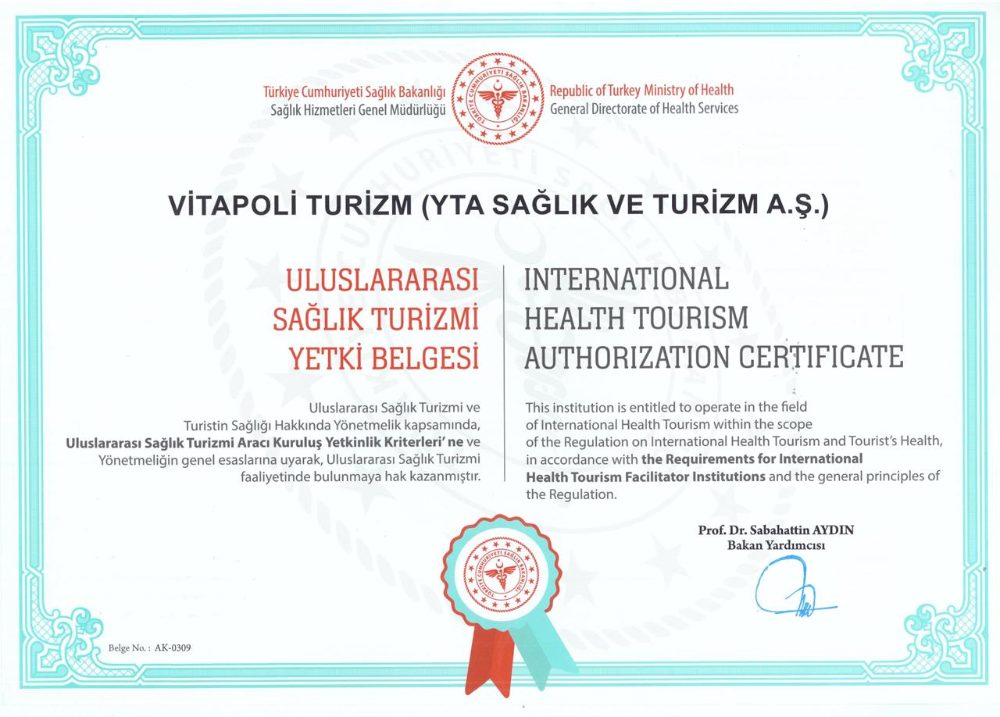
AYT Clinic (YTA Sağlık ve Turizm A.Ş.) is a licensed health tourism intermediary (licence no. AK-0309) that coordinates treatments in Antalya.
Make an Appointment
Talatpaşa Boulevard No: 113-9, Hacettepe Mahallesi, Altındağ / Ankara, Türkiye
Çalkaya Falezleri Cad. No: 2 Daire: 8, Altıntaş / Aksu / Antalya, Türkiye
Send Email: [email protected]
Call Us: +90 850 888 6898